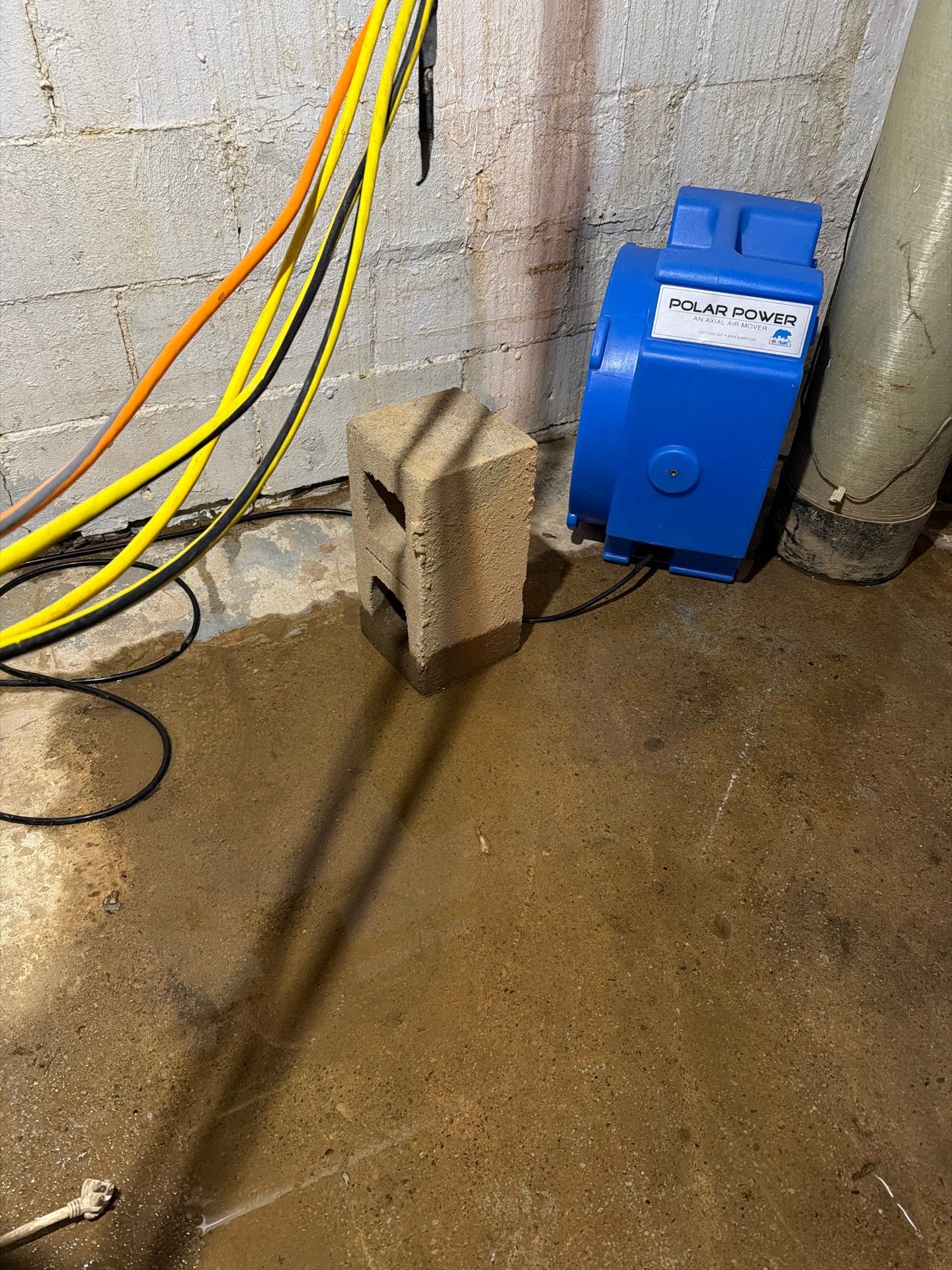
What Grey Water Actually Is (IICRC Category 2)
The IICRC sorts water losses into three categories. Grey water sits in the middle and contains significant contamination.
- Category 1 (clean): Broken supply lines, overflowing tubs with clean water, rainwater intrusion through a roof.
- Category 2 (grey): Dishwasher and washer discharge, aquarium leaks, urine-only toilet overflow, sump pit water, hydrostatic seepage through foundations.
- Category 3 (black): Sewage, river flooding, standing water older than 48 hours, any Category 2 that has sat and grown bacteria.
The key thing to remember: time degrades the category. A clean toilet supply line leak is Category 1 on hour one. By hour 72, it is Category 3.
7 Common Sources of Grey Water in Centennial Homes
- Washing machine hose burst. The number one grey water call we run in Centennial. Rubber hoses fail at 8 to 10 years.
- Dishwasher supply or drain leak. Detergent, food particles, and warm water create perfect bacterial conditions.
- Sump pump failure during heavy rain. The basin water itself is grey, and the resulting flood often qualifies.
- Aquarium rupture. Fish waste, algae, and tank chemistry make this Category 2 immediately.
- Toilet overflow with urine only. Add solids and it jumps to Category 3.
- HVAC condensate line backup. Standing water in drain pans grows biofilm quickly.
- Punctured water bed or large humidifier spill. Stagnant water that has sat in a reservoir is never clean.
Health Risks You Cannot See
Grey water is not visually scary. That is the problem.
- Bacteria counts often measure 10,000 to 1 million CFU per milliliter.
- Common pathogens include E. coli, Pseudomonas, Klebsiella, and Aeromonas.
- Detergent residue irritates skin and lungs.
- Mold spores germinate on damp drywall within 24 to 48 hours.
- Pets that lap up grey water can develop GI infections within hours.
Symptoms to watch for in the days after exposure:
- Skin rashes or contact dermatitis on hands, feet, or knees that touched the water
- Sore throat, sinus pressure, or a new cough that lingers past 48 hours
- Stomach upset, nausea, or low-grade fever in children
- Red, itchy eyes when entering the affected room
- Asthma flare-ups or wheezing in residents who normally have no symptoms
If you have an infant, elderly resident, or anyone immunocompromised, evacuate the affected area until cleanup is complete.
Your First 60 Minutes: What To Do Before We Arrive
- Stop the source. Shut the supply valve, kill the breaker to the appliance, or close the main if you cannot isolate it.
- Keep people and pets out of the wet zone.
- Photograph everything for your insurance claim, including the source.
- Move dry contents away from the water line. Do not try to save soaked rugs or upholstery yourself.
- Do not run a household vacuum or box fan. You will spread contamination and electrocute yourself.
- Call Centennial Water Restoration. We answer 24/7 and dispatch across Centennial with a target arrival window under 60 to 90 minutes.
Prevention: 5 Habits That Save Centennial Homeowners Thousands
- Replace washing machine hoses every 5 years with braided stainless steel.
- Test your sump pump quarterly and install a battery backup.
- Install leak sensors near the dishwasher, washer, and water heater. Wi-Fi models cost $25 to $60.
- Inspect dishwasher and ice maker connections every spring.
- Know where your main shutoff is. Tag it. Show every adult in the house.
Seasonal Checklist for Centennial Homes
- Spring: Test the sump pump with a 5-gallon bucket of water. Clear gutters and confirm downspouts discharge 6 feet from the foundation.
- Summer: Inspect HVAC condensate lines, flush with vinegar, and confirm the drain pan is dry.
- Fall: Disconnect exterior hoses, drain irrigation lines, and check washer hoses for blisters or rust at the fittings.
- Winter: Keep cabinet doors open under sinks on freezing nights and let one faucet drip on exterior walls.
Grey water is the category most homeowners underestimate. Treat it seriously on hour one and you keep it from becoming a Category 3 nightmare on hour 73. When in doubt, call Centennial Water Restoration and let a certified tech make the call on site.
What Grey Water Cleanup Costs in Centennial
Honest pricing, no padding. Most Centennial Category 2 jobs fall into these brackets:
- Small contained spill (under 100 sq ft): $1,200 to $2,800
- Single room with pad removal: $2,500 to $5,500
- Multi-room or finished basement: $4,500 to $11,000
- Whole-floor event with structural drying: $8,000 to $18,000
Variables that move the number: square footage affected, materials involved, hours since loss, and whether mold has started. For a full breakdown see our water damage restoration cost guide.
Grey Water vs Black Water: When It Crosses the Line
- More than 48 hours since the loss
- Visible biofilm or sliminess on surfaces
- Sulfur, rotten egg, or musty odor
- Water came from outside the building envelope
- Solids present in toilet overflow
If any of these apply, we treat it as Category 3. Our sewage cleanup team handles those calls with full PPE and containment.
Insurance: What Is and Is Not Covered
- Usually covered: Sudden and accidental discharge (burst washer hose, ruptured dishwasher line).
- Often disputed: Long-term seepage, poor maintenance, repeated leaks.
- Rarely covered: Surface groundwater flooding without a separate flood policy.
- Documentation that wins claims: Source photos, IICRC-certified scope, moisture logs, itemized invoice.
Mistakes that get claims reduced or denied:
- Throwing away the failed hose, valve, or appliance part before the adjuster sees it
- Starting demo work yourself before documentation is complete
- Waiting more than 72 hours to report the loss
- Letting an uncertified handyman dry the structure with box fans
- Mixing unrelated pre-existing damage into the same claim
We bill your carrier directly when you authorize it, and we speak their language.
The Centennial Water Restoration Category 2 Cleanup Process
Every grey water job follows the same IICRC-aligned sequence. We document each step for your insurance carrier.
- Assessment and moisture mapping. Thermal cameras and pin meters show us exactly how far the water traveled.
- Extraction. Truck-mounted or portable extractors remove standing water within the first visit.
- Contaminated material removal. Wet carpet pad, soaked drywall below the flood cut line, and porous insulation come out. Hardwood and tile we evaluate case by case. Our hardwood floor water damage guide walks through the decision tree.
- Antimicrobial application. EPA-registered biocide on every surface the water touched.
- Structural drying. Commercial air movers and LGR dehumidifiers run 3 to 5 days. Daily moisture readings until materials hit dry standard.
- Final clearance. Written documentation, before/after photos, drying log, and an itemized invoice your adjuster will accept.
What Gets Saved vs. What Gets Tossed
Customers always ask this on day one. Quick reference:
- Almost always saved: Solid wood furniture (after cleaning and drying), glass, metal, ceramics, sealed concrete.
- Often saved with treatment: Hardwood flooring caught within 48 hours, structural framing, kitchen cabinets if face frames stayed dry.
- Usually removed: Carpet pad, particleboard furniture, mattresses, upholstered couches that wicked water up the legs.
- Always removed: Wet fiberglass insulation, drywall that swelled or stained, MDF baseboards that swelled at the seams.