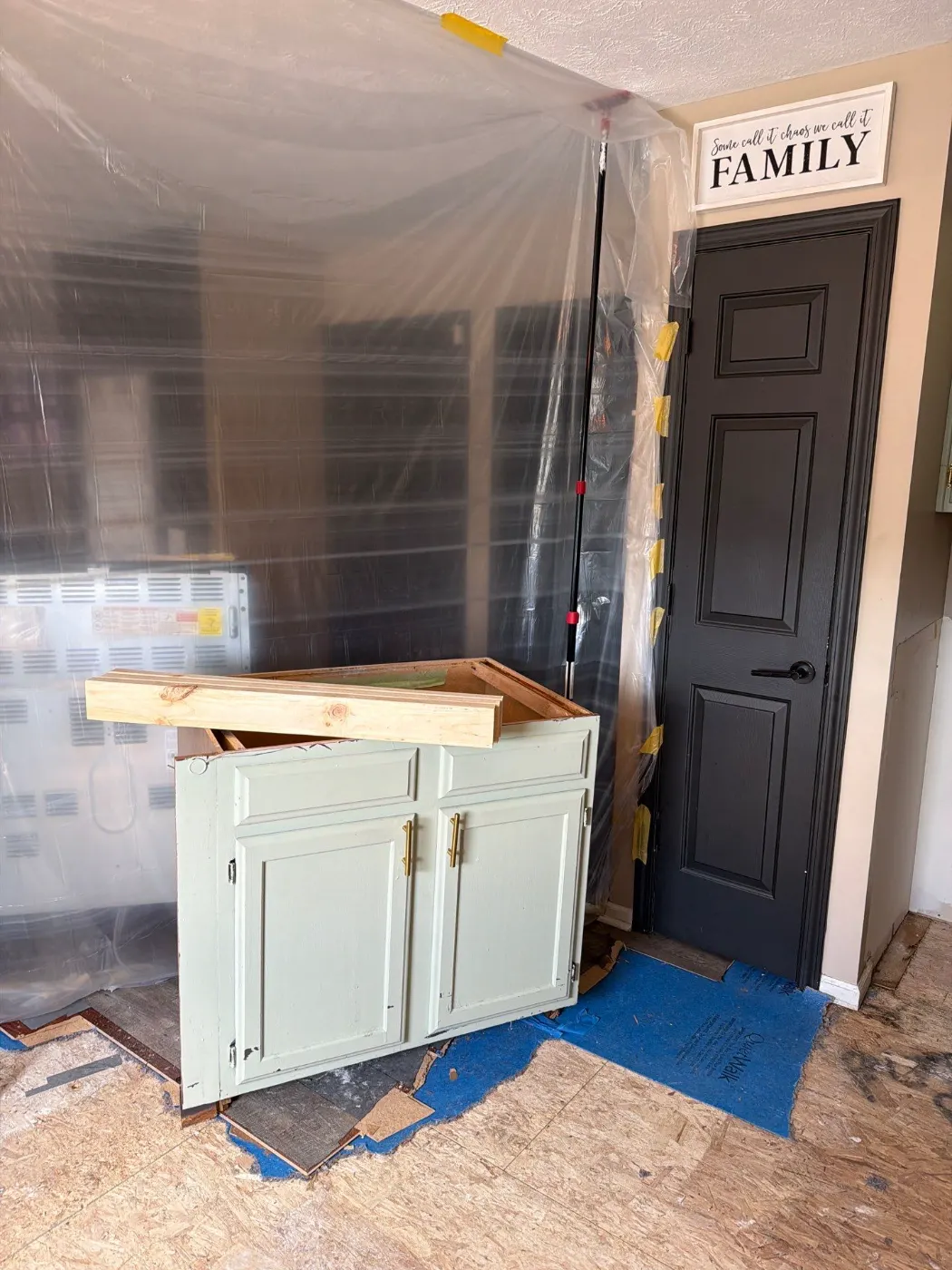
Commercial Flood Damage Cleanup in Centennial, IN
Commercial flood cleanup in Centennial, IN, with two hour dispatch and documentation built for a commercial claim.
Centennial Water Restoration is the Centennial call for Commercial Flood Damage Cleanup: emergency crews around the clock, moisture readings instead of guesswork, and insurance files built properly. Call (765) 703-7292.
- Service: Commercial Flood Damage Cleanup for Centennial homeowners
- Service area: Centennial, IN and surrounding areas
- Response time: Fast local response for Centennial; live dispatch every hour of the year
- Licensed and insured (License #RC21100059)
- Serving Centennial, IN since 2018
Commercial Flood Cleanup in Centennial
We'll pump out and dry commercial buildings in Centennial after floodwater gets inside.
Flood Exposure Here
Slow draining clay soil can hold floodwater against foundations and lower levels. Your building's own flood exposure gets mapped when we walk the site with your facilities contact.
Our flood crews work commercial sites throughout Centennial, including the blocks around the Kingman-Millcreek Public Library and US Route 41 corridor through Millcreek Township. We also handle commercial flood cleanup in Fountain County, Steam Corner, Yeddo and Kingman.
Commercial Flood Damage Cleanup for Centennial Businesses
A flooded building with the air handlers still running will push humid air into parts of the property the water never reached. Centennial Water Restoration coordinates with building engineering on commercial flood losses in Centennial to get the HVAC into a mode that supports drying, and the crew sets dehumidification against the measured cubic volume of the affected space.
Surfaces that stood in floodwater get cleaned before they get dried. Centennial Water Restoration washes concrete and block with detergent and rinses them out before an antimicrobial goes on where the scope calls for it, so the drying readings aren't taken over a film of silt. Each cleaned area is logged by date and location for your Centennial property.
Documentation happens daily while equipment runs. Moisture readings by location and material, temperature and relative humidity inside and outside the affected zones, equipment placement and run hours by room, and photographs of each area get recorded on the same schedule. Affected materials get compared against dry standard readings taken from unaffected parts of the same building, so the log shows a trajectory anyone can follow.
The documentation volume on a commercial loss surprises people. Hundreds of photographs, a reading set per affected area per day, equipment logs, disposal manifests, and a contents inventory add up into a file that takes office time to assemble correctly. Centennial Water Restoration treats that as part of the job, so the file is complete when you need it.
Before anyone cleans up or throws anything away, call Centennial Water Restoration and keep the building as the water left it wherever it's safe to do so. The waterline and the silt are the evidence behind your claim, and the crew photographs and measures them in your Centennial property before any of it moves.
Signs You Need Commercial Flood Damage Cleanup
If you notice any of these in your Centennial building, schedule a free inspection before the issue worsens.
Stored files and inventory that sat in floodwater on the bottom shelf or floor
Standing water in a stairwell or parking level below the building
Parking lot storm drains backing up and pushing water toward the entrances
Dried silt leaving gray dust on shelving and walls once the floor surface dries
Acoustic ceiling tiles stained brown or sagging out of the grid in a line under a pipe run
An expansion joint or control joint in the slab weeping water or staying dark for days
Floors that stay cold and damp for days after the water is gone, even with the HVAC running
A damp dark band across the concrete slab that spreads overnight and shrinks during the day
An adjuster or lender asking for moisture readings and photographs of the flood damage
Swollen particleboard casework or a reception desk with a soft base after the water dropped
How Centennial Water Restoration Handles Commercial Flood Damage Cleanup
We follow these steps in order on every Centennial job.
Two Hour Dispatch
Centennial Water Restoration dispatches a commercial crew to the property within two hours of the call, day or night. The truck arrives loaded with submersible and trash pumps, truck mounted extraction, dehumidification, air movers, moisture instruments, and containment material for the square footage reported on the phone.
Staged Water Drawdown
Below grade levels get pumped down in stages while the soil outside is still saturated. The crew pauses between passes to check walls and slab, and logs the water level each time.
Mud and Silt Removal
Mud goes into containers first, starting at the far end of the building and working toward the exit. Wet vacuums and a rinse pass follow, and floor drains get flushed and checked so water can drain freely.
HVAC Coordination
The crew works with building engineering to set the air handlers where they support drying and keep humid air out of unaffected areas. Ductwork and units that sat in water get flagged for your HVAC contractor to check before the system goes back into service.
Closeout File and Repair List
You receive the photographs, readings, equipment logs and disposal records in one file, along with a list of what was removed room by room. The people doing the repairs can scope from that list.
Commercial Flood Damage Cleanup in Centennial
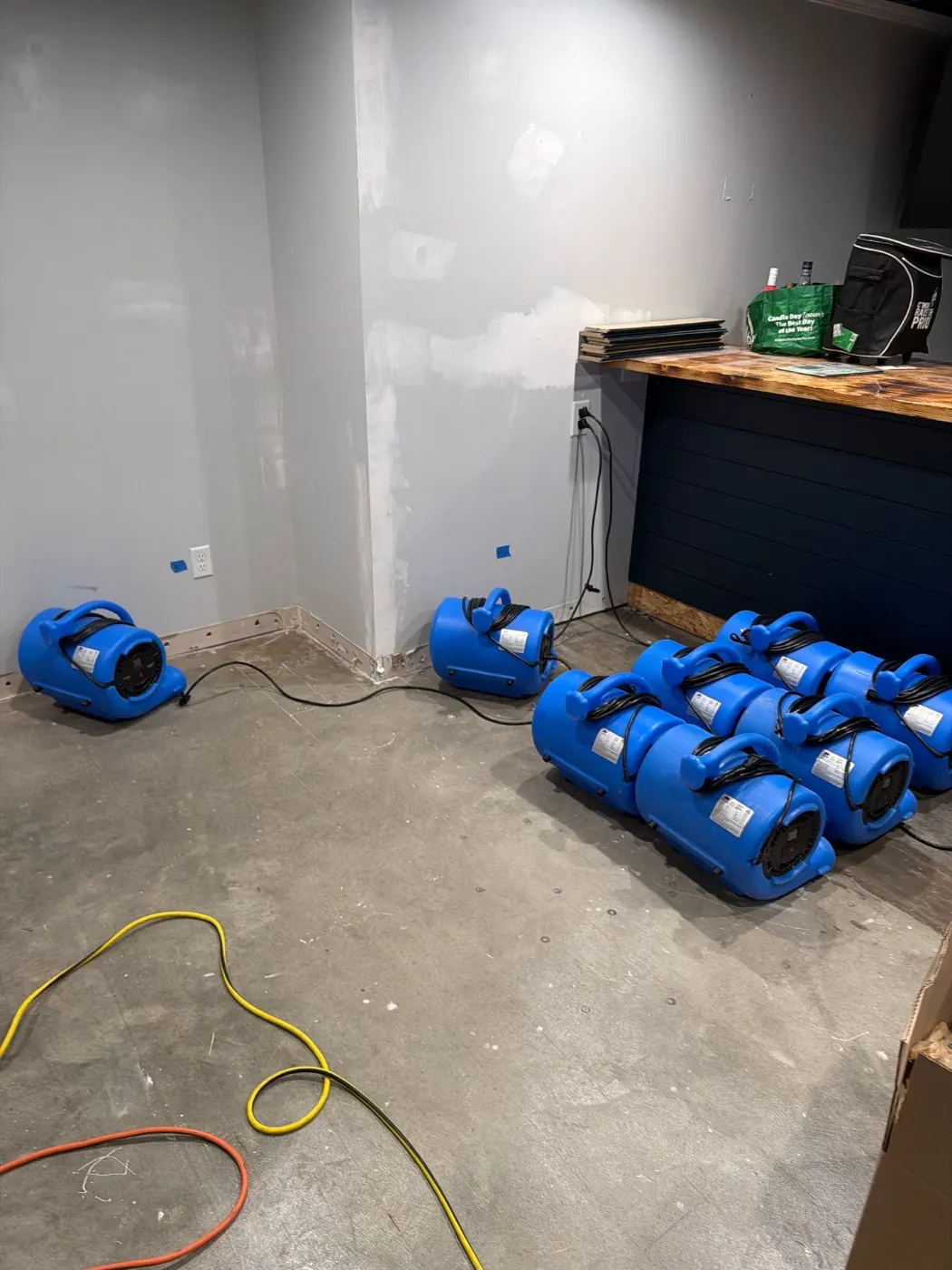
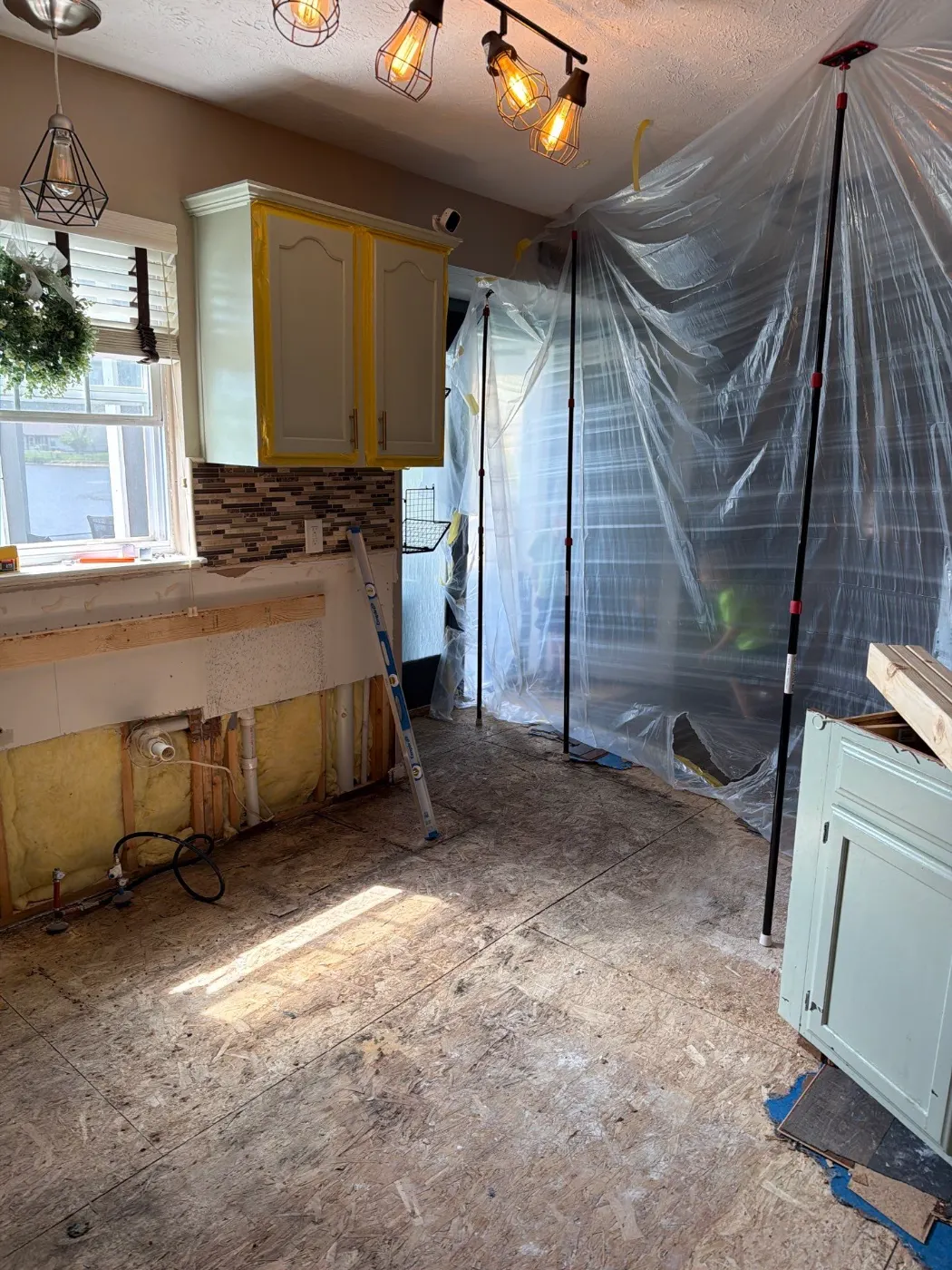
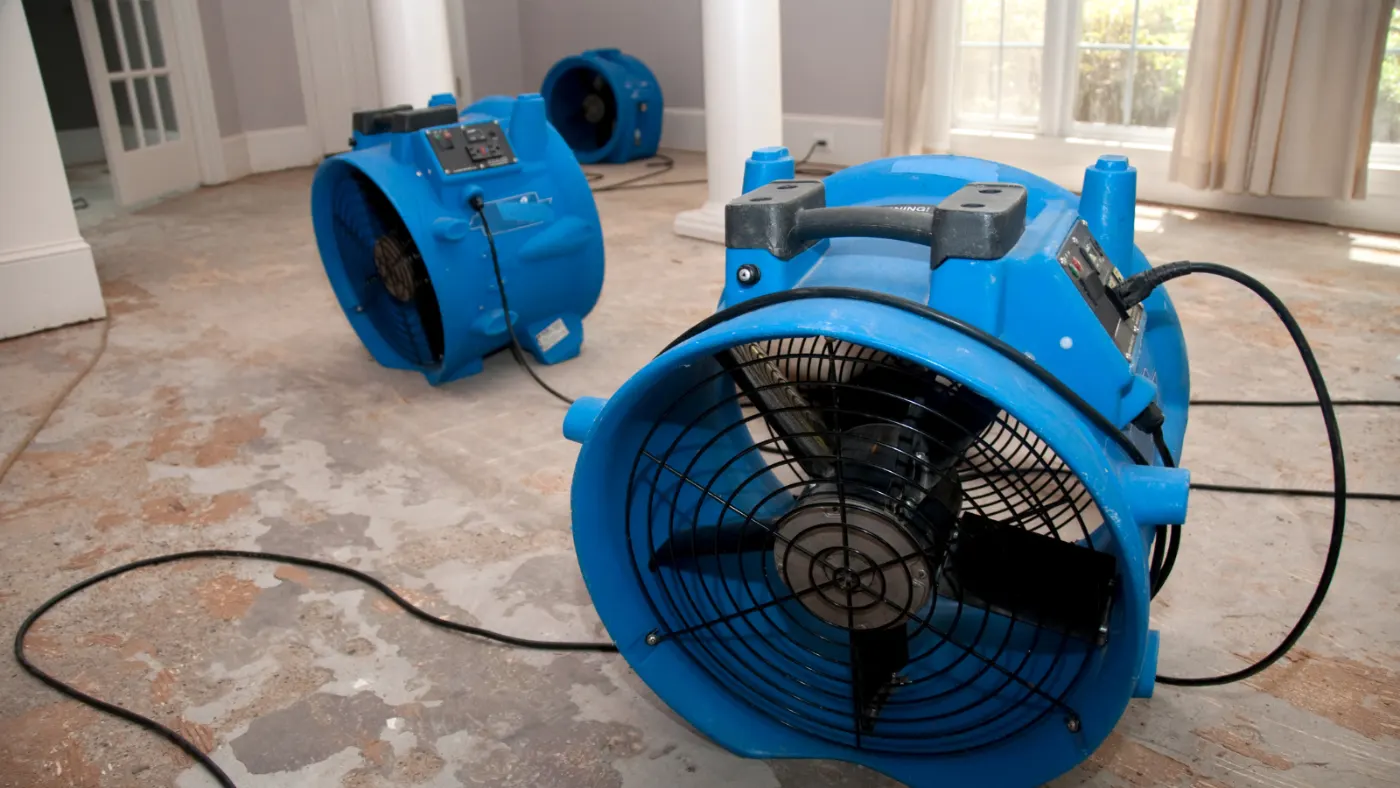
Photographs from real commercial flood damage cleanup jobs completed by our crew in Centennial and surrounding areas.
Commercial Flood Damage Cleanup FAQ
Questions Centennial property managers ask us about commercial flood damage cleanup.
Guidance and Standards for Commercial Flood Damage Cleanup
- The ANSI/IICRC S500 is the published standard for professional water damage restoration. The current edition is the Fifth Edition, 2021. IICRC S500 Standard
- EPA advises drying water damaged areas and items within 24 to 48 hours to prevent mold growth. EPA: A Brief Guide to Mold, Moisture and Your Home
Other Restoration Services in Centennial
Centennial Water Restoration handles the full scope of restoration work. Explore our other services below.
Water Damage Restoration in Centennial
24/7 emergency response. IICRC certified water restoration from extraction to full dry out.
Learn more →Basement Flooding in Centennial
Basement water emergencies handled fast. Extraction, drying, mold prevention.
Learn more →Sewage Cleanup in Centennial
Category 3 biohazard cleanup. Full containment, decontamination, structural restoration.
Learn more →Request Commercial Flood Damage Cleanup
Reach Us Directly
Our team is available 24/7 for emergencies and ready to schedule inspections during business hours.
Need Immediate Help?
For active water or mold emergencies, call us directly. We are available 24/7.