Commercial Mold Remediation in Centennial, IN
After the leak is fixed, Centennial Water Restoration deals with what it left behind in your Centennial walls and ceiling cavities.
Need Commercial Mold Remediation in Centennial? Centennial Water Restoration schedules certified assessments, delivers written scopes before any work starts, and coordinates with your insurance carrier on approved claims. Call (765) 703-7292.
- Service: Commercial Mold Remediation for Centennial homeowners
- Service area: Centennial, IN and surrounding areas
- Response time: Next available appointment, usually within a business day
- Licensed and insured (License #RC21100059)
- Serving Centennial, IN since 2018
Commercial Mold Remediation for Centennial Businesses
Indoor air quality concerns from staff are usually what forces the issue, and they deserve a clear answer about the building. Centennial Water Restoration can tell you where the moisture is, what materials have been affected, and how far the growth extends in your Centennial property. Questions about health belong with a physician, and air sampling belongs with an independent industrial hygienist. The work itself is finding the growth and the water feeding it, then removing the growth under containment and correcting the source.
After affected material comes out, every surface inside the enclosure gets HEPA vacuumed and wiped, including framing cavities, structural steel, concrete and the floor. Centennial Water Restoration keeps the air scrubbers running through that phase in your Centennial building, because the cleaning is what any verification sampling will measure. Containment stays up until that work is done and checked.
On floors that stay open, containment moves from zone to zone. Centennial Water Restoration builds the first enclosure around the area with the most growth in your Centennial building and finishes the full sequence inside it before the barrier moves to the next section. Each zone keeps its own readings and photographs, so the file shows where every part of the floor stood.
Service records tell the carrier how the building was kept, so pull them early. HVAC service logs, condensate line cleanings, plumbing repair invoices and building envelope inspection reports all show when a source was last addressed and who handled it. Centennial Water Restoration refers to those records in the cause section of the Centennial report, and you share the originals with your broker.
Spring thaw and heavy rain are when damp lower levels and exterior walls show their weak points across Centennial and Hamilton County. Call Centennial Water Restoration when the stains or the smell first appear, and the inspection maps the moisture while the affected area is still small and the walls are easy to open.
Signs You Need Commercial Mold Remediation
If you notice any of these in your Centennial building, schedule a free inspection before the issue worsens.
Ceiling tiles with staining on the back side that only shows when you lift one out of the grid
Lower level carpet or drywall that stayed wet for days after storm water came in at a door
Relative humidity in the space that stays high even with the mechanical equipment running normally
Condensate dripping from an air handler or a chilled water line onto the mechanical closet floor
Dark speckling on the gypsum board above the suspended ceiling line, visible from a ladder
An inspection report from a buyer's consultant that recommends remediation of one named area
Staining on the underside of carpet or pad that shows when a seam lifts
Musty air that greets staff on Monday mornings after the weekend HVAC setback
Visible growth on the paper facing of batt insulation sitting above the ceiling grid
A stain running down an interior column or chase wall where a roof leader passes through
How Centennial Water Restoration Handles Commercial Mold Remediation
We follow these steps in order on every Centennial job.
Initial Call and Access Planning
You describe what you're seeing and Centennial Water Restoration asks about the building: occupancy, access rules, who holds the keys and whether anyone has opened the area. That conversation sets up the inspection around your schedule.
Inspection and Moisture Survey
Crews walk the affected area with thermal imaging and penetrating moisture meters, lift ceiling tiles where readings justify it, and open small inspection ports in wall assemblies. The survey defines the real boundary of the growth and identifies where the water is arriving from.
Utility Isolation and Power Plan
Circuits and water lines that pass through the work area get isolated by the building engineer, and the crew confirms they're dead or shut before demolition. Dedicated power gets located for the negative air machines so pressure holds overnight.
Containment Teardown
Once cleaning and any verification are complete, the crew HEPA vacuums the barrier and folds the poly inward as it comes down. Negative air machines run until the last sheet is off the framing, and the floor gets a final wipe.
Source Correction and Rebuild
The moisture source gets corrected or assigned in writing to the mechanical or roofing contractor responsible for it. Once drying readings hold, Centennial Water Restoration rebuilds what came out: framing repairs, insulation, gypsum board, ceiling grid, flooring and finishes.
Commercial Mold Remediation in Centennial
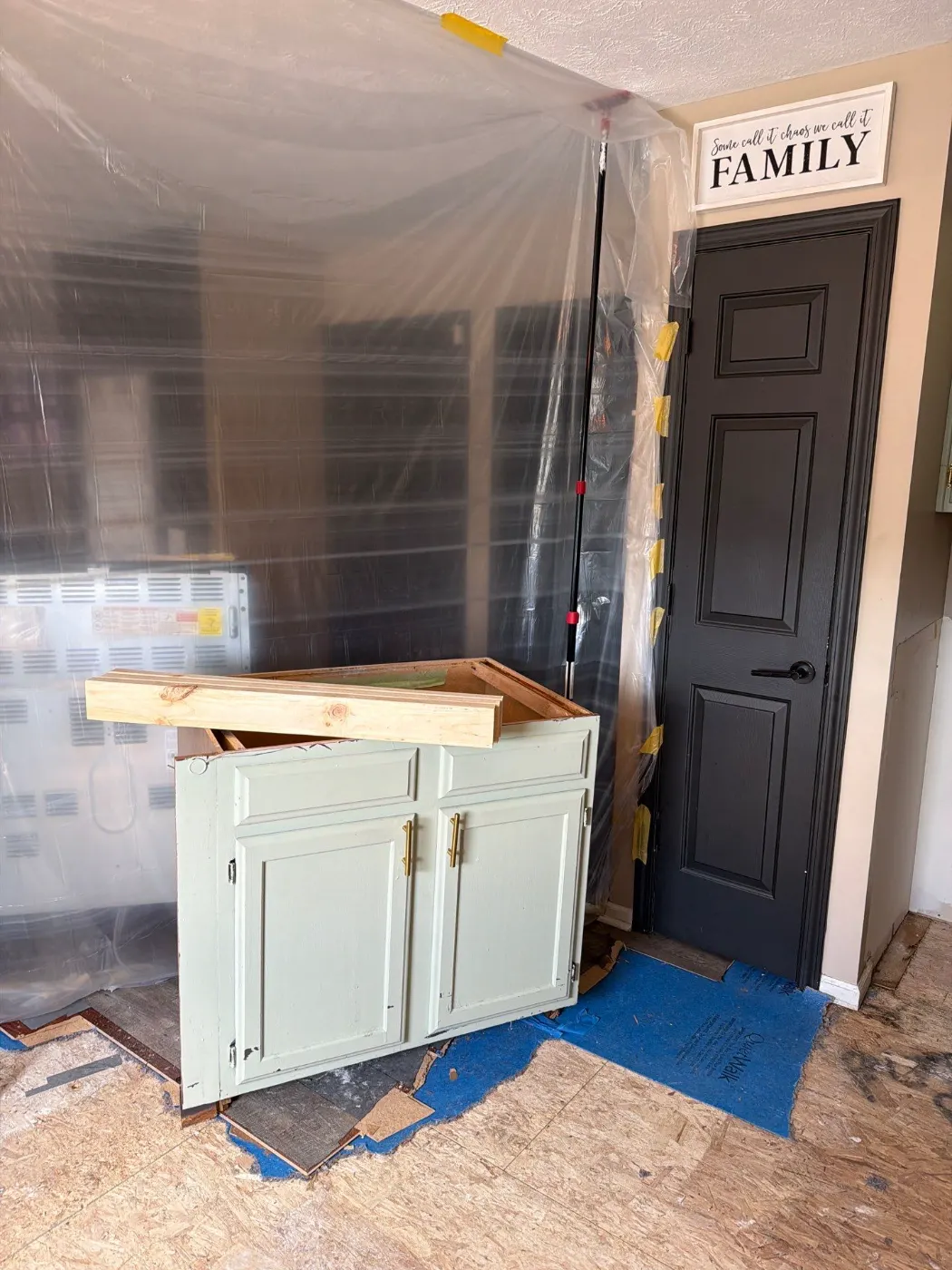
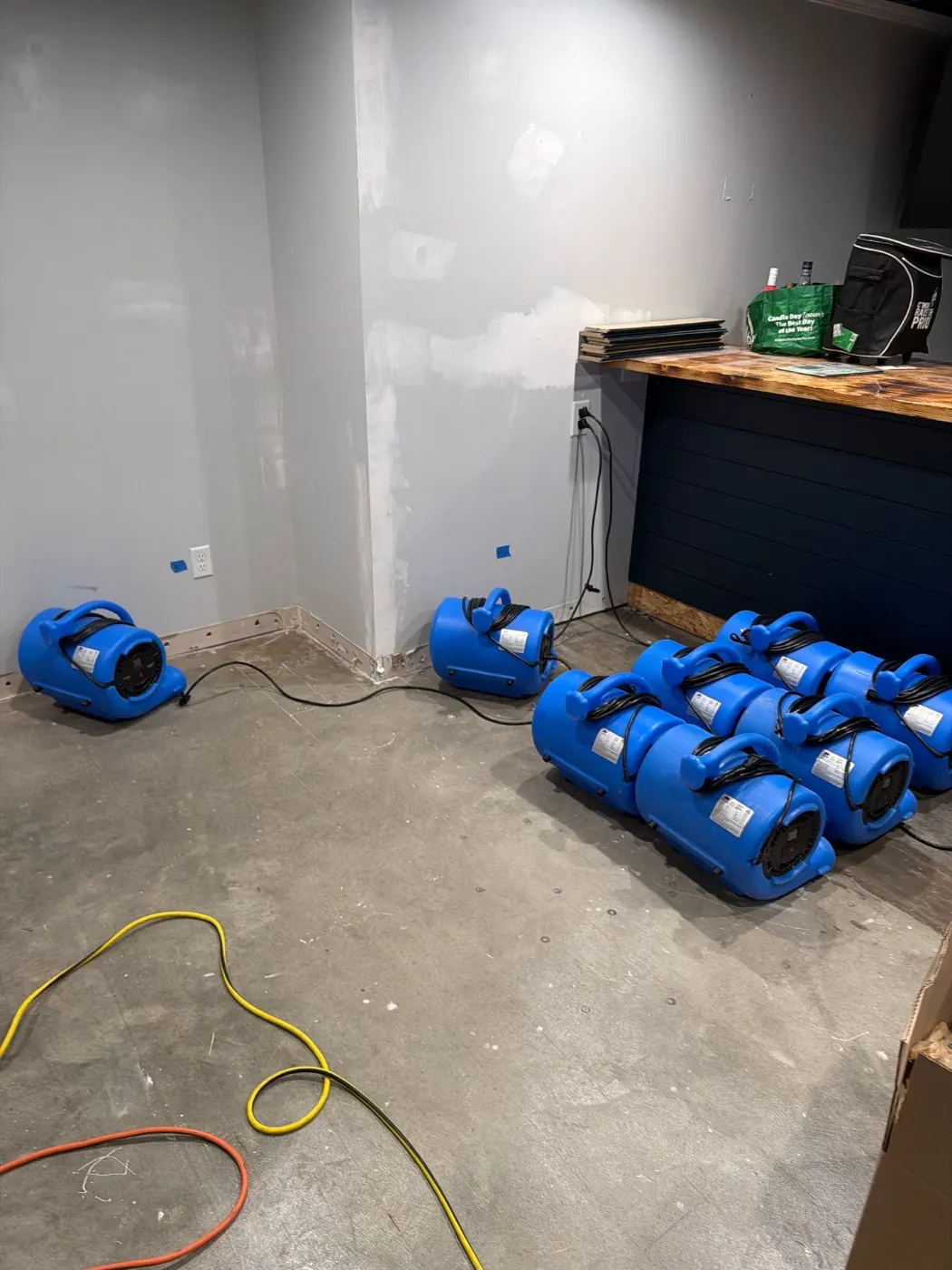
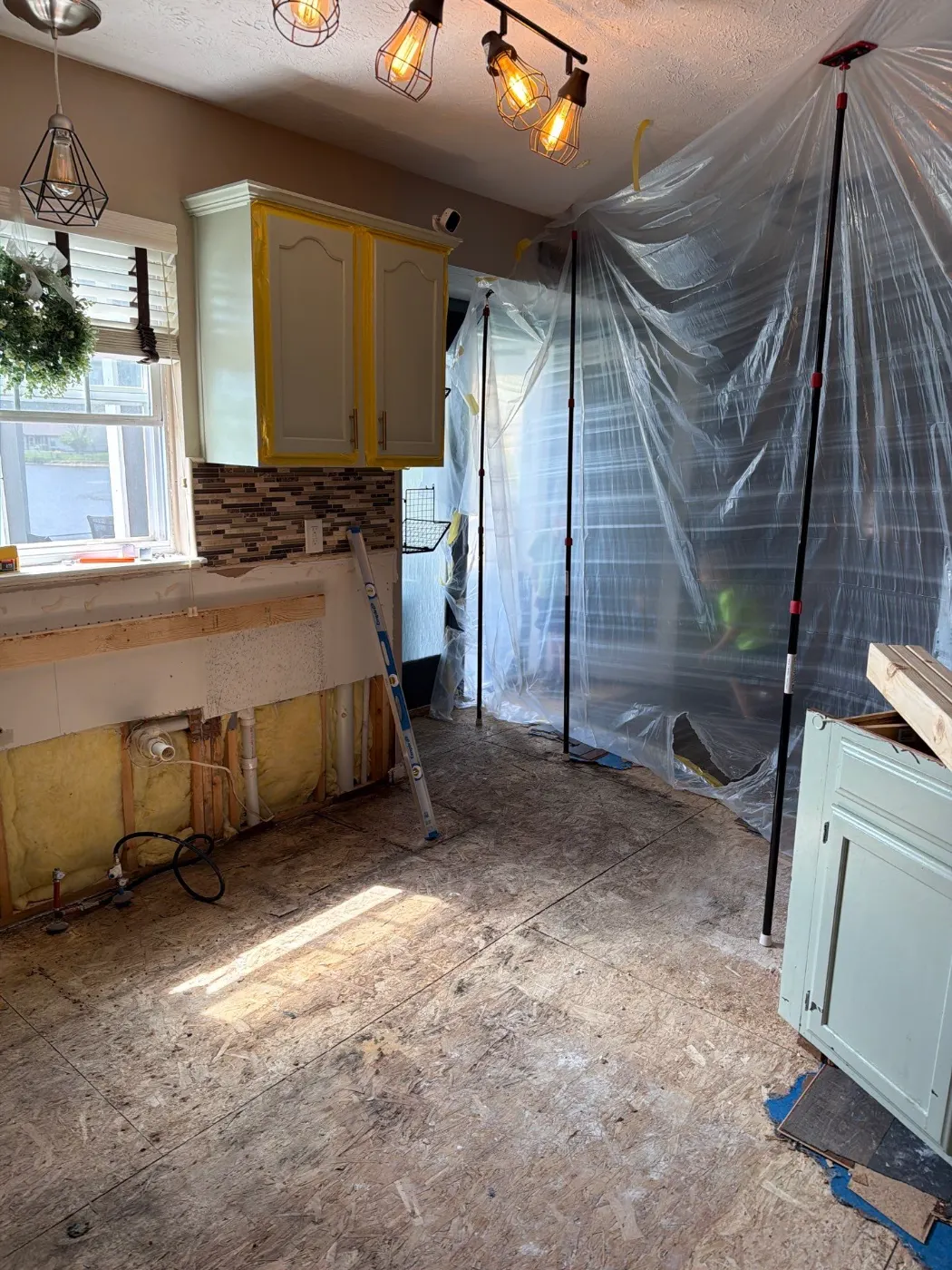
Photographs from real commercial mold remediation jobs completed by our crew in Centennial and surrounding areas.
Commercial Mold Remediation FAQ
Questions Centennial property managers ask us about commercial mold remediation.
Guidance and Standards for Commercial Mold Remediation
- The ANSI/IICRC S520 is the published standard for professional mold remediation. The current edition is the Fourth Edition, 2024. IICRC S520 Standard
- EPA’s mold guide says the key to mold control is moisture control. EPA: A Brief Guide to Mold, Moisture and Your Home
Other Restoration Services in Centennial
Centennial Water Restoration handles the full scope of restoration work. Explore our other services below.
Water Damage Restoration in Centennial
24/7 emergency response. IICRC certified water restoration from extraction to full dry out.
Learn more →Basement Flooding in Centennial
Basement water emergencies handled fast. Extraction, drying, mold prevention.
Learn more →Sewage Cleanup in Centennial
Category 3 biohazard cleanup. Full containment, decontamination, structural restoration.
Learn more →Request Commercial Mold Remediation
Reach Us Directly
Our team is available 24/7 for emergencies and ready to schedule inspections during business hours.
Need Immediate Help?
For active water or mold emergencies, call us directly. We are available 24/7.